
Choosing the Best Diesel Air Compressors in India: Key Factors to Consider
The modern industrial landscape in the Indian subcontinent is undergoing a massive transformation, driven by infrastructure development, massive mining projects, and a surge in manufacturing. At the heart of these rugged operations lies a critical piece of machinery: the Diesel Air Compressor. For industry leaders like Kulmec Compressor, this equipment serves as the primary power source for pneumatic tools, drilling rigs, and heavy-duty industrial processes where electrical grids are either inaccessible or insufficient. Selecting a unit is not merely a purchase; it is a strategic investment that determines the efficiency of a project site and the longevity of the tools connected to it. In the context of India’s diverse and often extreme climatic conditions, from the humid coasts to the arid plains, the requirements for a high-performance compression system are uniquely demanding.
Understanding Airflow and Pressure Requirements
The first technical hurdle in selecting the right equipment is accurately defining the airflow and pressure needs of your specific operation. Airflow is measured in Cubic Feet per Minute (CFM), representing the volume of air the unit can produce at a given pressure. Pressure, measured in Pounds per Square Inch (PSI), determines the force with which that air is delivered. It is essential to recognize that these two variables are inversely related within the physical constraints of an Industrial air compressor system. Increasing one often necessitates a trade-point with the other unless the engine capacity is scaled accordingly.
For industrial operators, the calculation of total air demand is a rigorous process. You must aggregate the CFM requirements of every tool intended to run simultaneously and then add a safety margin of approximately twenty percent to account for potential leaks in the piping or future tool additions.
If you are operating heavy jackhammers, sandblasting equipment, or large-scale drilling rigs, the CFM requirements will be substantially higher than for simple pneumatic hand tools. Selecting a unit with insufficient CFM will result in tool stall and project delays, while an oversized unit will lead to excessive fuel consumption and unnecessary mechanical wear due to short-cycling.
Engine Performance and Fuel Efficiency
In the Indian market, where fuel costs represent a significant portion of operational overhead, the efficiency of the diesel engine powering the compressor is paramount. The engine must not only provide high torque but must also comply with the prevailing Bharat Stage (BS) emission standards. Modern units are now designed to meet BS-IV or BS-VI norms, ensuring that the machine is environmentally compliant while maintaining peak power output. High-torque engines allow the compressor to maintain steady air delivery even under heavy loads, which is critical for continuous operations like road construction or tunneling.
Fuel efficiency is further enhanced by advanced electronic control modules that synchronize engine speed with air demand. When the air demand drops, the system automatically chokes down the engine, preventing fuel wastage. This is a vital consideration for any Diesel Air Compressor in india where project sites may be located in remote regions, making fuel logistics expensive and difficult. A unit that can extract more work per liter of diesel significantly reduces the total cost of ownership over its lifespan.
Portability and Build Quality for Indian Terrain
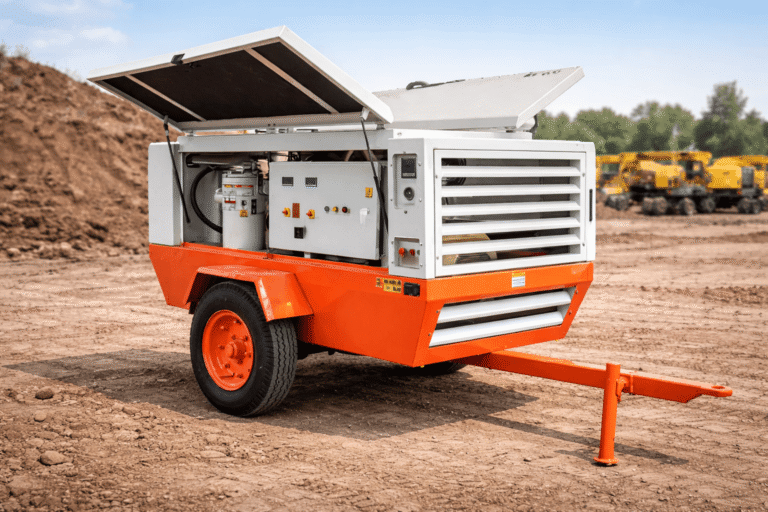
The physical environment of an Indian construction or mining site can be punishing. Dust, high ambient temperatures, and rough terrain demand a build quality that exceeds standard specifications. A Portable air compressor must be constructed with a heavy-duty chassis and a robust canopy to withstand mechanical impacts and environmental stressors. The canopy should be treated with high-quality anti-corrosion coatings to prevent rusting in coastal or high-moisture areas.
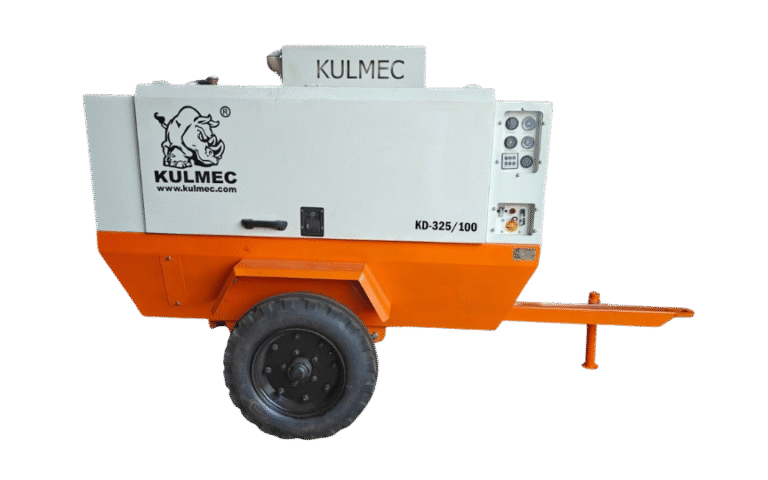
Portability options usually fall into two categories: skid-mounted or trolley-mounted.
1. Skid-mounted units: These are ideal for semi-permanent installations or for mounting on the back of trucks for mobile service, though they must utilize cooling systems specifically engineered with oversized radiators and efficient fan systems to handle the Indian summer, where ambient temperatures often exceed forty-five degrees Celsius; to avoid frequent thermal shutdowns.
2. Trolley-mounted units: Equipped with heavy-duty tires and reliable towing hitches, these are necessary for road construction projects where the equipment moves as the project progresses, requiring the same robust cooling engineering to prevent the unit from risking shutdowns in extreme ambient heat.
Availability of After Sales Support and Spare Parts
The true value of an industrial machine is often found in the support network that stands behind it. Given the intensity of industrial work, even the most robust machine will eventually require maintenance or parts replacement. When evaluating a Diesel Air Compressor, the density of the manufacturer’s service network is a non-negotiable factor. Downtime on a major project can cost lakhs of rupees per day, making the availability of on-site service technicians and local spare parts inventory a critical business requirement.
A reliable manufacturer ensures that consumables such as oil filters, air filters, and separators are readily available across major industrial hubs. Furthermore, the ability to access technical expertise for troubleshooting complex issues prevents minor mechanical glitches from turning into unfortunate failures. Choosing a brand with a proven track record in the Indian market ensures that the equipment remains operational for its intended service life, providing a consistent return on investment.
Environmental and Noise Considerations
Urban Noise & Environmental Regulations
Rapid urbanization in India has led to stricter rules on noise pollution and environmental protection, especially for construction projects in major cities such as Mumbai, Delhi, and Bangalore.
Low-Noise Compressor Design
To meet urban requirements, modern machines are built with acoustically treated enclosures that reduce noise from the diesel engine and air end, making them suitable for metropolitan job sites.
Clean Air for Sensitive Industries
For applications like food processing and precision manufacturing, oil-free air compressors or systems with high-efficiency filtration are essential to prevent oil contamination in the air supply.
Leak Prevention & Environmental Safety
Modern systems are designed with spill-proof frames that contain accidental oil or coolant leaks, helping prevent soil contamination at construction and industrial sites.
High-Efficiency Air-Oil Separation
Premium units include advanced air-oil separators that ensure clean discharged air while keeping lubricating oil within the system, extending equipment life and supporting environmental protection.
Kulmec: Delivering Excellence in the Indian Market
Among the leaders in the industry, Kulmec Compressor stands out as a premier choice for high-performance compression solutions. As a prominent Diesel Air Compressor manufacturer in India, Kulmec Compressor has engineered its product line to specifically address the accuracy of local industrial environments. The company’s commitment to robust engineering is evident in the durability of its units, which are designed to operate under the most strenuous conditions without compromising on precision or output.
They provide a distinct competitive edge through superior fuel efficiency and optimized air delivery. By utilizing advanced air-end technology and perfectly matched diesel engines, they ensure that operators get the maximum CFM for every drop of fuel consumed. This focus on efficiency, combined with a reputation for building machines that simply do not quit, has made Kulmec Compressor a trusted partner for large-scale construction, infrastructure, and heavy industrial operations across the country. Their presence ensures that clients receive localized support and engineering expertise tailored to the unique challenges of the region.
Maintenance and Long Term Reliability
Long-term reliability is the product of both superior manufacturing and disciplined maintenance. For heavy-duty applications, such as a Diesel Air Compressor for mining in India, the maintenance schedule must be strictly followed due to the high-dust environment. Mining operations often involve 24/7 cycles where the machine is under constant load. In these scenarios, the use of a High-pressure air compressor is often required for deep-hole drilling, necessitating even more frequent checks on the pressure valves and safety systems.
Effective maintenance involves regular monitoring of:
- Oil levels.
- Air filter cleanliness.
- Belt tension.
Cooling systems must be flushed periodically to prevent the buildup of scale, which can lead to overheating. A dependable unit comes with an easy-to-use control panel that shows real-time maintenance alerts. This helps operators schedule servicing in advance instead of dealing with sudden breakdowns. Taking this preventive approach improves reliability and clearly sets well-run industrial operations apart from those that suffer from frequent mechanical problems.
Operational Efficiency in Mining and Infrastructure
The mining sector remains one of the most demanding users of compressed air technology. A Diesel Air Compressor used in mining in India must deliver steady and reliable airflow to run heavy pneumatic drills that cut through hard rock. In mining conditions, both air quality and stable pressure play a key role in how fast drilling happens, which directly impacts the mine’s productivity and profits. Operations at high altitudes or in deep pits add extra pressure on the engine, as changes in oxygen levels and temperature can affect overall performance.
Infrastructure projects, such as bridge building and highway expansion, similarly rely on these units for sandblasting, concrete spraying, and powering various air-driven tools. The ability of the compressor to handle variable loads throughout the day is essential. Whether it is a quiet period of light tool use or a high-intensity phase of heavy destruction, the system must adapt seamlessly. This versatility is what makes the diesel-powered unit the backbone of Indian infrastructure development, providing mobile power that electrical alternatives cannot yet match.
Final Technical Evaluation and Brand Integration
When making the final selection, a technical audit of the manufacturer’s claims is necessary. Look for transparency in power ratings and air delivery statistics. A reputable Diesel Air Compressor manufacturer in India will provide detailed performance curves and fuel consumption data. Reliability in the field is also bolstered by features like heavy-duty air intake filters and multi-stage fuel filtration, which protect the engine and air end from the contaminants common on Indian job sites.
The integration of smart technology is the latest frontier in this industry. Modern units now offer GPS tracking and remote monitoring, allowing fleet managers to track fuel consumption, location, and engine health from a central office. This level of oversight is particularly beneficial for large companies managing multiple units across various states. It enables data-driven decision-making and ensures that the fleet is utilized at its maximum efficiency, further justifying the initial capital expenditure.
Strategic Selection for Future Growth
The decision-making process for choosing a compression system should always be forward-looking. As projects scale and deadlines become tighter, the demand for reliable air power will only increase. By focusing on high-quality components, superior fuel efficiency, and robust local support, industrial players can ensure their operations remain competitive. The choice is ultimately a decision about the reliability of your future projects.
Investing in a machine that can handle the heat, the dust, and the workload of the Indian industrial sector ensures that your pneumatic tools and heavy machinery always have the power they need to perform. Whether for a small construction firm or a massive mining conglomerate, the principles of selection remain the same: prioritize airflow accuracy, engine durability, and the strength of the manufacturing partner.
Conclusion
In the demanding world of Indian industry, the right power source is the difference between a project that finishes on time and one that falters under mechanical strain. A high-quality Diesel Air Compressor is an indispensable asset for any site requiring mobile, reliable, and high-pressure air. By carefully weighing factors such as CFM requirements, fuel efficiency, and the localized expertise of manufacturers like Kulmec Compressor, businesses can secure their operational success. As the nation continues its rapid industrial expansion, the reliance on robust, diesel-powered compression technology will remain a cornerstone of progress. Contact us now to find the perfect diesel air compressor to optimize your air power strategy and for your specific industrial needs.
Frequently Asked Questions
Single-stage compressors compress air to the final pressure in one stroke, making them suitable for pressures up to 100-125 PSI. Two-stage compressors involve a primary compression followed by cooling and a second compression phase, allowing them to reach much higher pressures, often exceeding 175 PSI, which is necessary for heavy industrial and mining applications.
To determine the required CFM, you must check the technical specifications of each tool you plan to operate. Add the CFM requirements of all tools that will be used at the same time. It is standard practice to add a 20% buffer to this total to account for air loss in hoses and to ensure the engine is not constantly running at 100% capacity.
Diesel units generally have higher maintenance requirements due to the internal combustion engine, which requires regular oil, filter, and coolant changes. However, they provide the essential benefit of portability and independence from the electrical grid, which is often the deciding factor for Indian construction and mining sites.
With the high cost of diesel and the remote location of many project sites, fuel efficiency directly impacts the profitability of a project. An efficient engine reduces the frequency of refueling, lowers logistics costs, and decreases the overall operational cost per hour of air delivery.
POWER YOUR PROJECTS WITH RELIABLE AIR POWER
Looking for a powerful diesel air compressor for demanding industrial and construction applications? Connect with us to explore reliable, efficient, and durable compressor solutions built to perform in tough working conditions.
our esteemed clients


GET IN TOUCH
- +91 - 98793 14524
- sales@kulmec.com
- Block No: 339, Plot no: 3-4, Opp. Honest Weigh Bridge, Vehlal Road, Zak GIDC, Village: Zak, Dehgam - 382415, Gandhinagar, Gujarat, India