
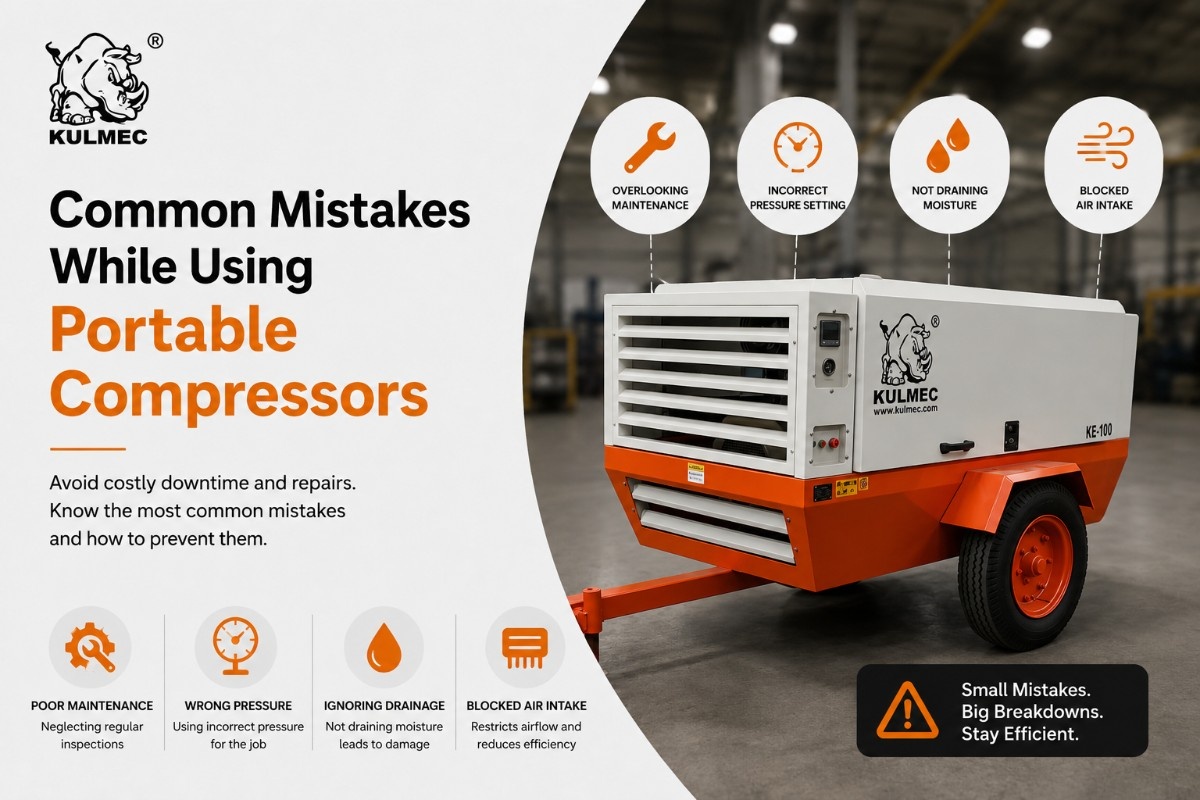
Portable air compressors keep drilling rigs, sandblasting teams, and mining sites running. But small mistakes in daily use slowly damage the compressor, waste fuel, and cause breakdowns. As a leading portable air compressor manufacturer in India, Kulmec Compressor sees these problems often, machines that stop working, higher fuel costs, and parts that wear out too soon, all because of avoidable mistakes.
This guide explains the nine most common mistakes we see on mining, construction, and industrial sites, along with easy fixes your team can use right away. Whether you run one electric compressor at a quarry or a fleet of engine-driven units across many sites, these tips apply to you.
Mistake #1: Picking the Wrong Compressor Size
The biggest mistake happens even before the compressor reaches the site, choosing the wrong size (CFM and pressure) for the tools it needs to power.
- Too small: The compressor has to run non-stop at full power. This puts stress on the motor or engine, and your tools still don’t get enough air.
- Too big: You waste money buying, running, and maintaining a machine bigger than you need.
Before you order equipment, add up how much air (CFM) all your tools need if they run at the same time. Add about 20-30% extra to cover air loss in hoses and pipes. If you’re not sure how to do this, remember that a portable air compressor for mining in India should be sized for real site conditions, height above sea level, heat, and how long it runs not just numbers from a brochure.
Mistake #2: Skipping Regular Maintenance and Filter Checks
Filters, oil levels, and service checks are usually the first things teams skip when work is running late, and this is exactly what causes trouble later.
A dirty air filter makes the compressor work harder to pull in air. This raises the temperature inside and burns more fuel. Old or low oil wears out bearings and moving parts faster.
Fix: Set a fixed maintenance routine, check oil and fluids daily, check filters weekly, and do a deep clean once a month. Don’t wait until the machine “sounds off.” Most sudden breakdowns start with a missed filter change or low oil.
Mistake #3: Not Giving the Compressor Proper Air and Space
Mining and quarry sites are naturally dusty, and dust is one of the biggest enemies of a portable compressor. Placing the unit in a closed, dusty, or poorly ventilated spot causes two problems: the machine can’t cool down properly, and dust gets pulled straight into the intake.
Fix: Keep the compressor in an open, shaded spot with air flowing freely around it. Point the intake filter away from dust clouds caused by drilling or blasting, and clear loose material nearby that wind or vehicles could kick up.
Mistake #4: Using the Wrong Power or Fuel Setup
Engine-driven and electric compressors work differently, and mixing up their power needs is a common error.
- Running an electric compressor on a weak or unstable generator causes power drops that slowly damage the motor.
- Using poor-quality or dirty diesel in engine-driven units clogs the injectors and lowers performance.
Fix: Always match the compressor’s power needs to a properly sized generator or power line, and use the fuel grade the manufacturer recommends. If your site often loses power, an engine-driven compressor is usually the safer choice for steady mining or drilling work.
Mistake #5: Forgetting to Drain Moisture
As compressed air cools down inside the pipes, water forms inside. If this water isn’t drained, it rusts parts, damages your air tools, and in cold weather, it can freeze and crack valves and fittings.
Fix: Drain the water traps and tank at the start and end of every shift, don’t wait until you can see moisture. In humid areas, adding a cooler or water separator can help even more.
Mistake #6: Not Checking Hoses, Couplings, and Fittings
Even a small crack in a hose or a loose coupling wastes air and lowers pressure at the tool. Workers then push the compressor harder than needed. Worn fittings are also dangerous, they can come loose suddenly under pressure and hurt someone nearby.
Fix: Spend five minutes before every shift checking for cracked hoses, listening for hissing sounds at joints, and making sure couplings are locked in place.
Mistake #7: Skipping Safety Rules
Portable compressors work at high pressure, and that can cause serious injury if not handled carefully. Not wearing safety gear, ignoring pressure relief valves, or letting untrained workers run the machine are mistakes that cost far more than a delay.
Fix: Make safety gear (ear protection, eye protection, gloves) compulsory, test pressure relief valves regularly, and train every operator on how to start, stop, and shut down the machine safely.
Mistake #8: Running the Compressor Past Its Duty Cycle
Every compressor has a “duty cycle”, the amount of time it can run continuously before it needs to rest and cool down. Running it non-stop through long shifts without a break is one of the fastest ways to wear it out early.
Fix: Check your compressor’s duty cycle rating and plan short cooldown breaks during long shifts, especially in hot weather when the machine already runs hotter than usual.
Mistake #9: Poor Transport and Storage Habits
Portable compressors are made to move between sites, but rough roads and careless handling damage them over time. Loose tie-downs let the machine shake and bounce during transport, and leaving it out in rain, dust, or sun between jobs wears down hoses, seals, and covers faster.
Fix: Tie the compressor down securely during transport, check the wheels and frame after rough trips, and store it under cover when it’s not in use. If your team moves equipment often, ask one person to note down any recurring damage like a loose part or weak spot, so it can be fixed before it causes a breakdown mid-shift.
How to Choose a Reliable Portable Compressor Partner
Avoiding these mistakes gets much easier when you use equipment built for tough site conditions. Look for a supplier that offers:
- A range of CFM and pressure options for drilling, sandblasting, and mining work
- Strong build quality tested against dust, heat, and rough terrain
- Local service and spare parts support, so a breakdown doesn’t mean weeks of waiting
- CE certification and experience working with mining and industrial clients
Kulmec Compressor has spent years supplying engine-driven and electric portable compressors to mining, drilling, and industrial sites in India and abroad, backed by an in-house quality team and a dealer network built for quick support.
Conclusion
Most compressor breakdowns aren’t bad luck, they come from avoidable habits: wrong sizing, skipped maintenance, poor placement, ignoring duty cycles, and careless transport. Fixing these habits will help your equipment last longer, save fuel, and reduce downtime across your sites.
If you’re planning your next project, Kulmec Compressor’s team can help you choose the right engine-driven or electric portable unit for your site, whether it’s mining, drilling, sandblasting, or general industrial work. Get in touch with us to discuss your requirements.
FAQ‘s
1. How often should a portable air compressor be serviced?
Check oil, fluid levels, and drain moisture daily. Inspect filters weekly and do a deep clean once a month, especially in dusty or heavy-use environments like mining sites.
2. What CFM do I need for mining or drilling work?
It depends on how many tools run at once and your site’s altitude. As a portable air compressor manufacturer in India, Kulmec suggests adding up total tool demand, adding 20-30% extra, and matching that to a compressor’s rated CFM.
3. Can I use electric and engine-driven compressors interchangeably?
Not without the right power setup. Electric units need stable, correctly rated power, and engine-driven units need good-quality fuel. Mixing this up shortens the machine’s life.
4. Why does my compressor keep losing pressure?
Usually it’s air leaks in hoses or fittings, a clogged filter, or worn-out seals. Regular checks catch most of these problems early.
5. Can a portable air compressor handle continuous mining work?
Yes, as long as it’s sized correctly and you respect its duty cycle. A properly chosen mining-grade unit, with planned cooldown breaks, can run reliably through long shifts.