
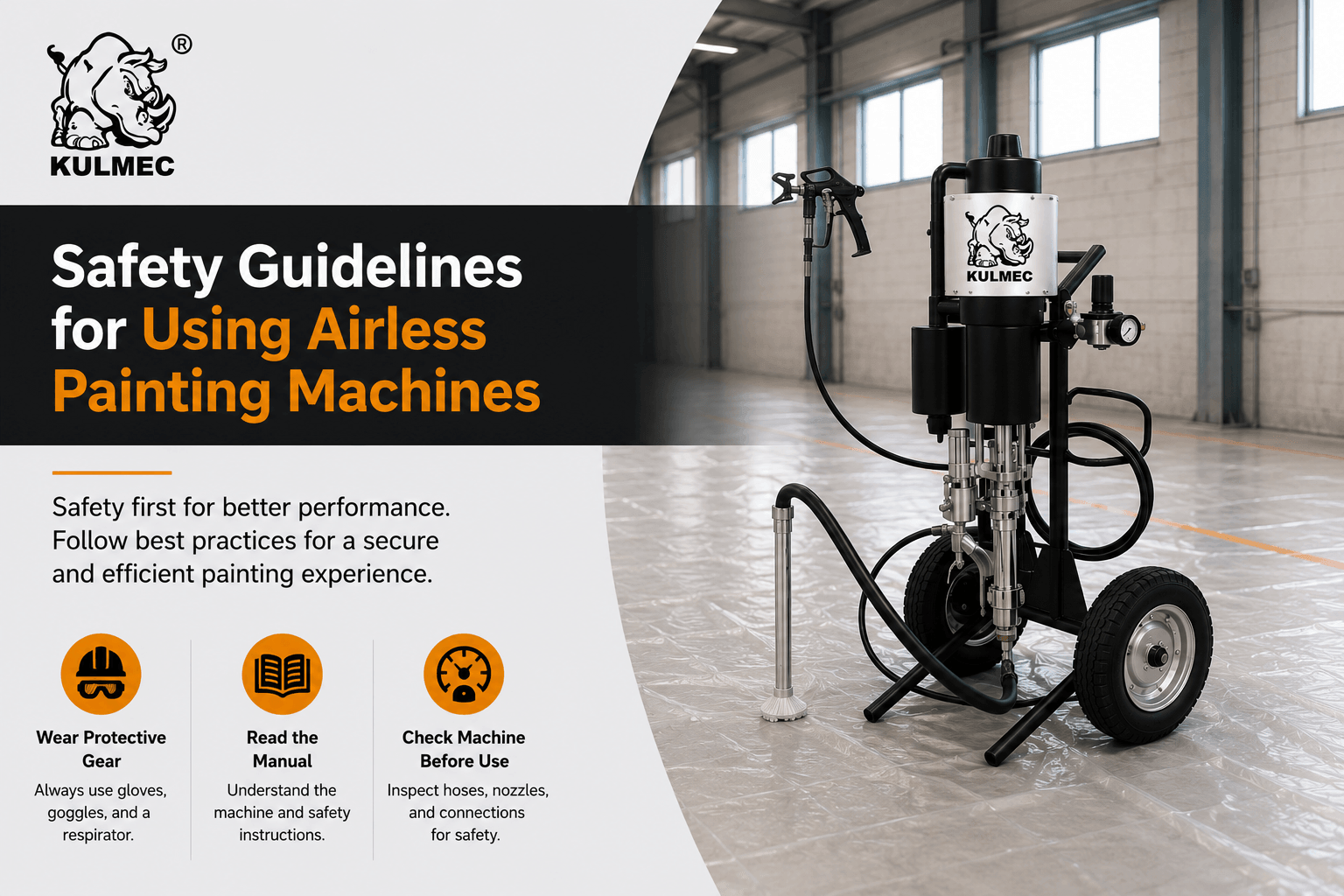
Airless painting machines have made painting large areas much easier and faster. They are widely used in factories, construction sites, warehouses, bridges, and commercial buildings. These machines help apply paint quickly, give a smooth finish, and improve work efficiency. However, airless painting machines work at very high pressure, so it is important to use them carefully and follow proper safety rules. A small mistake can lead to accidents or equipment damage.
Whether you are a professional painter, contractor, or machine operator, knowing the right safety practices can help you work safely and get better painting results. At Kulmec Compressor, we believe that using quality equipment along with proper safety measures is the key to successful painting projects. As a trusted Airless Painting Machine Manufacturer in India, we always encourage users to follow recommended safety guidelines.
In this blog, we will explain important safety tips for using airless painting machines, possible risks, ways to avoid accidents, and simple practices to keep the workplace safe while achieving the best painting results.
Understanding How Airless Painting Machines Work
An airless painting machine works by pumping paint at very high pressure through a small spray tip. Unlike conventional spray systems that use compressed air to atomize paint, airless systems rely entirely on pressure to create a fine spray pattern.
This technology offers several advantages, including faster coverage, reduced overspray, and the ability to handle thicker coatings. However, the high-pressure operation also introduces unique safety concerns. Even a small mistake during operation can result in equipment damage, paint injection injuries, or exposure to harmful chemicals. For this reason, every operator should be properly trained before using an airless painting machine and should always follow manufacturer instructions.
Why Safety Matters When Using Airless Painting Machines
Many workplace accidents occur because operators underestimate the pressure generated by these machines. The spray emitted from an airless system can penetrate skin, causing serious injuries that may require immediate medical attention.
In addition to injection injuries, workers may face risks such as:
- Exposure to toxic paint fumes
- Slips caused by paint spills
- Fire hazards from flammable coatings
- Eye injuries from paint spray
- Equipment malfunction due to improper maintenance
Implementing proper safety practices significantly reduces these risks and ensures smooth project execution.
Wear Proper Personal Protective Equipment (PPE)
One of the most important safety measures is wearing appropriate personal protective equipment. Operators should always wear safety glasses or protective goggles to prevent paint from entering the eyes. Gloves designed for chemical resistance help protect the skin from paint and solvents. Long-sleeved clothing and protective coveralls minimize direct skin contact with coatings.
When working in enclosed spaces or areas with limited ventilation, respiratory protection becomes essential. Paint fumes can contain harmful chemicals that may affect respiratory health over time. Using approved respirators helps reduce exposure to hazardous airborne particles. Proper footwear with slip-resistant soles also helps prevent falls on surfaces affected by paint overspray or spills.
Inspect Equipment Before Every Use
Before starting any painting project, carefully inspect the entire system. Check hoses for cracks, leaks, wear, or damage. High-pressure hoses are critical components, and even minor defects can lead to dangerous failures. Examine fittings, connections, spray guns, and tips to ensure everything is secure.
Operators should also verify that pressure settings are appropriate for the coating being used. Excessive pressure may increase wear on equipment and create unnecessary safety risks. Regular inspection not only improves safety but also extends equipment lifespan and maintains consistent spray quality.
Follow Proper Startup Procedures
Many accidents occur during machine startup because operators rush through the setup process. Always read the manufacturer’s operating manual before using the equipment. Ensure that all components are properly connected and secured. Position the machine on a stable and level surface to prevent movement during operation.
Before activating the system, confirm that all personnel in the work area are wearing proper protective equipment. Test the spray pattern on a safe surface before beginning the actual project. Following a systematic startup process reduces unexpected equipment issues and improves operational efficiency.
Never Point the Spray Gun at People
An airless spray gun should never be pointed toward any person under any circumstances. The pressure generated by an airless painting machine is powerful enough to inject paint directly into human tissue. Such injuries may appear minor initially but can become severe medical emergencies requiring immediate treatment.
Operators should always treat the spray gun as a potentially hazardous tool. Keep fingers away from the spray tip and engage safety locks whenever the gun is not actively being used. Maintaining awareness of spray direction at all times helps prevent accidental injuries.
Ensure Proper Ventilation in the Work Area
Ventilation plays a major role in maintaining workplace safety. Many paints, primers, and coatings release fumes that can accumulate in enclosed environments. Prolonged exposure to these fumes may cause dizziness, headaches, respiratory irritation, or other health concerns.
When using an airless painting machine indoors, ensure sufficient airflow through open windows, doors, exhaust systems, or industrial ventilation equipment. Continuous air circulation helps remove harmful vapors and creates a safer working environment. Adequate ventilation also reduces the risk of fire when working with flammable materials.
Handle Paints and Solvents Safely
Paints and cleaning solvents should always be handled according to manufacturer recommendations. Store materials in approved containers and keep them away from heat sources, sparks, and open flames. Read safety data sheets (SDS) to understand potential hazards associated with specific coatings.
Avoid mixing chemicals unless specifically instructed by the manufacturer. Proper labeling and storage help prevent accidental misuse and exposure. As an experienced Airless Painting Machine Manufacturer in India, Kulmec Compressor recommends establishing clear material handling procedures on every job site to improve safety and compliance.
Use Correct Pressure Settings
Not every coating requires maximum operating pressure. Excessive pressure can increase overspray, waste material, and accelerate wear on spray components. More importantly, unnecessarily high pressure increases potential safety risks. Operators should adjust pressure according to the paint viscosity and project requirements. Modern machines often provide pressure adjustment features that help achieve optimal performance while maintaining safety. Using the lowest pressure that produces a consistent spray pattern is generally considered best practice.
Prevent Static Electricity and Fire Hazards
Some paints and solvents contain flammable substances that can create fire risks. Grounding equipment properly helps prevent the buildup of static electricity. Ensure that all system components, including hoses and spray equipment, comply with applicable safety standards. Keep ignition sources away from the work area and prohibit smoking near painting operations. Fire extinguishers should always be readily accessible in locations where flammable coatings are being applied. Safety planning is especially important for industrial projects where large quantities of coatings are used.
Clean Equipment Carefully After Use
Proper cleaning is an important part of safe machine operation. Before performing maintenance or cleaning, always relieve system pressure completely. Failure to do so can result in accidental discharge of high-pressure paint or solvent. Use recommended cleaning solutions and follow manufacturer procedures. Inspect components during cleaning to identify wear or damage that may require attention before the next project. Routine cleaning not only improves safety but also ensures consistent machine performance and longer service life.
Train Operators Regularly
Even experienced operators benefit from ongoing training. Technology, safety regulations, and industry standards continue to evolve. Regular training helps workers stay informed about best practices, hazard recognition, and emergency response procedures. Employers should provide instruction on equipment operation, maintenance requirements, personal protective equipment, and safe handling of coatings and solvents. Choosing equipment from a trusted Airless Painting Machine Manufacturer in India can also provide access to technical guidance and operational support that enhances workplace safety.
Create an Emergency Response Plan
Despite taking precautions, emergencies can still occur. Every worksite should have a clearly defined emergency response plan. Workers should know how to respond to paint injection injuries, chemical exposure incidents, equipment failures, and fire emergencies. Emergency contact numbers should be easily accessible, and first-aid supplies should be available on-site. Quick response can significantly reduce the severity of workplace incidents. Regular safety drills can improve preparedness and ensure that workers know exactly what to do during unexpected situations.
Common Mistakes to Avoid
Many safety incidents result from avoidable mistakes. Ignoring equipment inspections, bypassing safety features, operating with damaged hoses, neglecting PPE, and rushing maintenance procedures can all increase risk. Another common mistake is assuming that experienced operators do not need refresher training. Continuous learning remains important regardless of experience level. Maintaining a safety-first mindset helps prevent these issues and contributes to a more productive work environment.
Choosing Quality Equipment Matters
Safety begins with selecting reliable equipment from reputable manufacturers. High-quality machines are designed with advanced safety features, durable components, and dependable performance standards.
Businesses should evaluate equipment based on reliability, ease of maintenance, pressure control capabilities, and manufacturer support services. Investing in quality equipment often reduces downtime and improves overall project efficiency.
Organizations looking for dependable solutions frequently partner with an established Airless Painting Machine Manufacturer in India to ensure consistent performance and long-term value.
Conclusion
Airless painting machines help you complete painting work faster while giving a smooth and even finish. They are widely used in factories, commercial buildings, and large industrial projects. Since these machines work with very high pressure, it is important to follow safety rules at all times. Proper training, wearing safety gear, checking the machine before use, handling paint materials carefully, and doing regular maintenance can help prevent accidents and keep the machine working efficiently.
At Kulmec Compressor, we provide reliable industrial equipment that delivers both performance and safety. Using the right machine with safe working practices helps improve productivity, reduces downtime, and protects your team. Looking for a dependable airless painting machine? Contact us today and let our experts help you choose the right solution for your business.